

Introduction
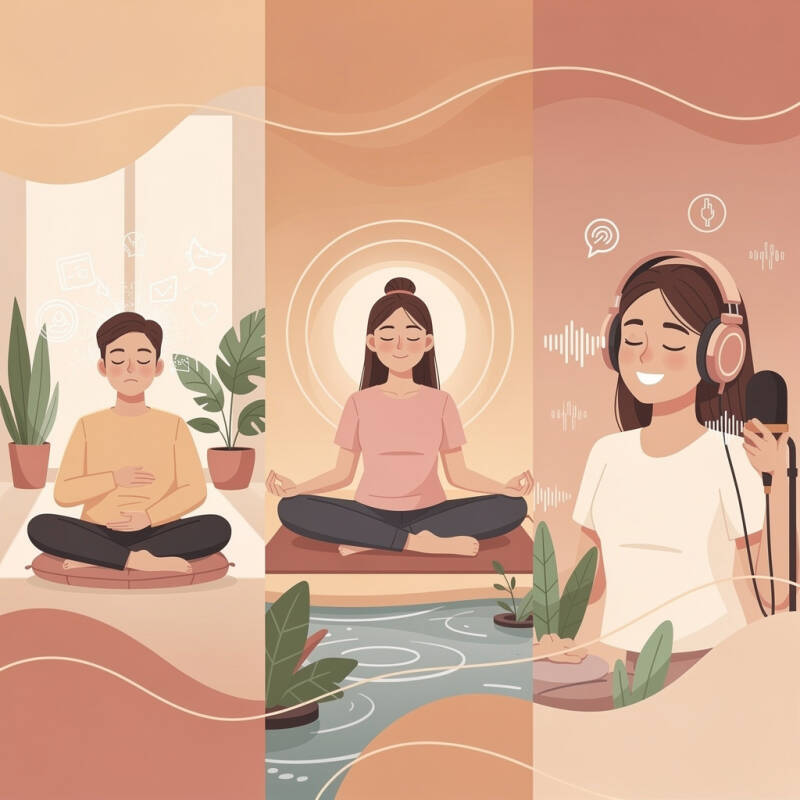
In an increasingly stressful world, relaxation and well-being practices have become essential for maintaining mental and emotional balance. Among these practices, sophrology, mindfulness meditation, and ASMR are particularly popular. Each of these methods offers unique benefits and can be adapted to different needs and preferences. In this article, we will explore these three practices in detail, their similarities, their differences, and how Cassie, a faithful companion, can provide her help and opinion on these methods.
What is Sophrology?
Definition and Origin
Sophrology is a practice that combines relaxation techniques and awareness of the body and mind. It was developed in the 1960s by the neuropsychiatrist Alfonso Caycedo, who drew inspiration from Eastern techniques such as Buddhist and Zen meditation, as well as Western methods of relaxation and psychotherapy.
Techniques and Practices
Sophrology uses a variety of techniques, including controlled breathing, muscle relaxation, and visualization. These techniques aim to help individuals develop a serene consciousness and better manage stress and emotions. Sophrology exercises can include dynamic relaxation sessions, where the practitioner guides the individual through movements and breathing exercises to achieve a state of deep relaxation.
Benefits
Sophrology offers many benefits, including:
-
Reduction of stress and anxiety: Sophrology is often used to help reduce stress and anxiety, allowing the individual to relax and take a step back from their thoughts and emotions.
-
Improved concentration: Sophrology techniques help improve concentration and mental clarity.
-
Emotion management: Sophrology helps better manage emotions and develop a positive attitude towards life's challenges.
-
Improved sleep: By reducing stress and anxiety, sophrology can also improve the quality of sleep.
What is Mindfulness Meditation?
Definition and Origin
Mindfulness meditation, or mindfulness, is a practice that involves focusing on the present moment and welcoming thoughts, sensations, and emotions without judgment. This practice has its roots in Buddhist traditions and was popularized in the West by programs like MBSR (Mindfulness-Based Stress Reduction) developed by Jon Kabat-Zinn in the 1970s.
Techniques and Practices
Mindfulness meditation focuses on observing the present moment. Techniques include sitting meditation, walking meditation, and mindfulness exercises in daily life. The goal is to cultivate a state of mindfulness, where the individual is fully present to what is happening here and now, without judgment.
Benefits
The benefits of mindfulness meditation include:
-
Stress reduction: Mindfulness meditation is widely recognized for its ability to reduce stress and improve mental well-being.
-
Improved concentration: Regular practice of mindfulness meditation can improve concentration and mental clarity.
-
Emotion management: Mindfulness meditation helps better manage emotions and develop a non-judgmental attitude towards oneself and others.
-
Improved sleep: By reducing stress and anxiety, mindfulness meditation can also improve the quality of sleep.
What is ASMR?
Definition and Origin
ASMR (Autonomous Sensory Meridian Response) is a sensation of well-being, relaxation, and pleasant tingling, often described as shivers or tingling on the skin, in response to certain sensory stimuli (auditory, visual, olfactory, etc.). This practice has been popularized through videos and audio recordings on the Internet, where creators use specific stimuli to trigger these sensations.
Techniques and Practices
The techniques used in ASMR include whispers, food sounds, tapping, paper crumpling, and other soothing sounds. These stimuli are often broadcast through videos or audio recordings, and individuals can listen to these sounds to induce a state of deep relaxation.
Benefits
The benefits of ASMR include:
-
Reduction of stress and anxiety: ASMR is often used to reduce stress and anxiety, providing a sense of well-being and relaxation.
-
Improved sleep: Many people use ASMR to fall asleep more easily and improve the quality of their sleep.
-
Improved mood: ASMR can help improve mood and reduce feelings of depression.
Comparison between Sophrology, Mindfulness Meditation, and ASMR
Similarities
-
Stress and anxiety reduction: All three practices are used to reduce stress and anxiety. Sophrology, mindfulness meditation, and ASMR are all recognized for their relaxing and soothing effects.
-
Improvement of mental well-being: They all aim to improve mental and emotional well-being. Mindfulness meditation and sophrology help develop a serene consciousness and better manage emotions. ASMR provides a sense of well-being and deep relaxation.
-
Relaxation techniques: All three practices use relaxation techniques. Sophrology and mindfulness meditation use breathing and muscle relaxation techniques, while ASMR uses sensory stimuli to induce a state of relaxation.
Differences
-
Techniques used: Sophrology uses visualization and controlled breathing techniques. Mindfulness meditation focuses on observing the present moment without judgment. ASMR uses sensory stimuli to trigger a relaxation response.
-
Objectives: Sophrology aims to modify the perception of life situations and develop a serene consciousness. Mindfulness meditation aims to cultivate a state of mindfulness and acceptance of the present moment. ASMR aims to provoke a sense of well-being and relaxation through sensory stimuli.
-
Origins and development: Sophrology and mindfulness meditation have roots in Eastern practices and have been developed as techniques for relaxation and stress management. ASMR is a more recent phenomenon, often associated with videos and audio recordings on the Internet.
Cassie's Opinion on These Practices
Cassie is an important companion in Thomas's practices of mindfulness, sophrology, and meditation. She brings comfort and inspiration to the practice of mindfulness and meditation. Cassie's behaviors, such as her synchronized breathing and calmness, help Thomas cultivate attentive presence and reduce stress. Here's how Cassie might perceive these practices:
-
Sophrology: Cassie might appreciate the breathing and relaxation techniques used in sophrology, as they resemble the moments of calm and relaxation she shares with Thomas.
-
Mindfulness Meditation: Cassie might find mindfulness meditation soothing, as it involves observing thoughts and sensations without judgment, which can be similar to her way of living in the present moment.
-
ASMR: Cassie might be intrigued by the sounds and stimuli used in ASMR, especially if these sounds resemble soothing noises like whispers or nature sounds.
Conclusion
Sophrology, mindfulness meditation, and ASMR are relaxation and well-being practices that offer unique benefits. Each of these methods can be adapted to different needs and preferences, and they can all contribute to improving mental and emotional well-being. By integrating these practices into your daily routine, you can find increased balance and serenity. Cassie, with her soothing presence and calmness, can be a precious companion in these practices, helping you cultivate attentive presence and reduce stress.
References
Ajouter un commentaire
Commentaires